European Union(EU) Cocoa Export Rules in 2026: What Nigerian Farmers and Exporters Need to Know
The European Union remains an important market for Nigerian cocoa, but exporting cocoa to Europe is becoming increasingly dependent on traceability and evidence about where and how the crop was produced.
The major issue Nigerian cocoa farmers and exporters need to understand in 2026 is the EU Deforestation Regulation, commonly called EUDR. Cocoa is one of the commodities covered by the regulation, alongside commodities such as coffee, soy, palm oil, rubber, cattle and wood. The regulation requires relevant products entering the EU market to be deforestation-free and legally produced.
There is an important timing point for Nigerian businesses. The main EUDR obligations apply from 30 December 2026 for large and medium-sized operators. Micro and small operators generally receive an additional period until 30 June 2027, subject to the specific rules and exceptions in the regulation.
That does not mean Nigerian farmers should wait until the deadline before preparing. EU buyers and international cocoa traders have already been strengthening traceability and geolocation systems in Nigerian cocoa supply chains, according to an EU-supported assessment of the Nigerian cocoa sector.
For farmers, cooperatives, aggregators and exporters, the practical message is straightforward: knowing the exact source of cocoa is becoming just as important as knowing its quality and quantity.
What EUDR means for Nigerian cocoa
The EUDR is intended to prevent commodities and products associated with deforestation or forest degradation from entering the EU market.
For cocoa, the rules require the relevant supply chain to demonstrate that the cocoa was produced on land that was not subject to deforestation after 31 December 2020 and that it was produced in accordance with the applicable legislation of the country of production.
This changes the type of information that matters in an export transaction.
Traditional cocoa export records may tell an exporter:
- who sold the cocoa
- how much cocoa was purchased
- where the cocoa was aggregated
- when it was shipped
- what grade it achieved
EUDR compliance requires much more detailed supply-chain information, including the location of the plots where the cocoa was produced.
The European Commission states that the required due diligence information includes the country of production and the geolocation of all plots where the relevant commodity was produced.
When will the EU cocoa rules apply?
The EUDR entered into force in 2023, but its main obligations have a later application date.
For large and medium-sized operators, the main obligations apply from 30 December 2026.
For micro and small operators, the general application date is 30 June 2027, although businesses previously covered by the EU Timber Regulation have a different treatment under the rules.
This distinction is important because a Nigerian farmer may not be the EU operator directly responsible for placing cocoa on the European market.
The EU importer or other relevant operator may carry the legal responsibility for the EU-side due diligence process. However, that operator needs reliable information from its supply chain to complete the required due diligence.
An EU-supported assessment of Nigeria’s cocoa sector specifically noted that EU importers are responsible for EUDR obligations while Nigerian producers and exporters may need to adapt their supply chains to meet the information and verification requirements of individual EU buyers.
Why farm geolocation matters
Farm geolocation is one of the most important practical issues for Nigerian cocoa producers.
Under the EUDR, operators need the geographic coordinates of the plots where the relevant cocoa was produced. If cocoa comes from several farms, the relevant geolocation information for those plots needs to be available.
This means an exporter cannot simply state that a shipment came from a particular Nigerian state or local government area.
The supply chain needs to be capable of connecting the cocoa to the production plots.
For a cocoa farmer, this may involve working with a cooperative, buying agent, exporter or traceability programme that records the farm location.
For an exporter, it means developing a system capable of connecting individual suppliers and farms to specific cocoa purchases and shipments.
What information needs to be collected?
The European Commission identifies several categories of information required for EUDR due diligence.
For cocoa, relevant information includes the product and quantity, country of production, geolocation of the production plots, supplier information and evidence supporting that the product is deforestation-free and legally produced.
In practical terms, a Nigerian cocoa supply chain should be working toward reliable records covering:
Farmer identity and supplier records: The exporter should know who supplied the cocoa and maintain appropriate business records.
Farm location: The production plot needs to be identifiable through the required geolocation information.
Production information: Records should allow the exporter and buyer to understand where and when the cocoa was produced.
Traceability: Cocoa purchased from identified farms should remain traceable through aggregation, storage and export.
Legality information: The supply chain needs evidence that the cocoa was legally produced under the applicable rules in Nigeria.
Product information: Quantity, product description and relevant shipment information need to be documented.
The precise documentation process can differ between supply chains because the EUDR does not prescribe one universal commercial traceability system. However, the required information and due diligence obligations must still be satisfied.
What does deforestation-free cocoa mean?
For EUDR purposes, the key date is 31 December 2020.
The European Commission explains that relevant commodities must not have been produced on land that was subject to deforestation after that date.
For Nigerian cocoa farmers, this makes land-use history important.
A farmer establishing a cocoa farm on land that was cleared after the relevant cutoff date may create a compliance problem for cocoa intended for the EU market.
This is why exporters should not wait until cocoa is already sitting in a warehouse before investigating farm locations and land-use history.
Traceability is much easier when information is collected at farm level from the beginning.
Why legality is also important
Being deforestation-free is only one part of the EUDR requirement.
The European Commission also requires relevant commodities to have been produced in accordance with the relevant legislation of the country of production.
For Nigerian cocoa, exporters therefore need to take the legality element seriously rather than treating EUDR as only a satellite mapping exercise.
Land rights, production arrangements and other applicable legal requirements can become relevant depending on the circumstances of the farm and supply chain.
The EU-supported Nigerian cocoa assessment identified traceability and legality as significant challenges in the Nigerian cocoa sector, particularly because of fragmented production and informal elements within the supply chain.
What Nigerian cocoa farmers should do now
Farmers do not necessarily need to become international trade specialists to prepare for the new requirements.
The most useful step is to make farm-level information reliable.
A farmer supplying cocoa for export should work with a credible cooperative, aggregator or exporter that is implementing a traceability system.
The farmer should be prepared to provide accurate information about the farm and maintain consistency in the information supplied.
Where geolocation is being collected, the farmer should make sure the coordinates actually correspond to the farm producing the cocoa.
Farmers should also avoid supplying cocoa from unidentified sources into a traceability system. Mixing cocoa from farms that cannot be identified can create problems when the exporter later needs to demonstrate the origin of a shipment.
What Nigerian cocoa exporters should prepare
Exporters have a more extensive responsibility because they sit between Nigerian producers and international buyers.
A practical preparation programme should include the following:
Map the supply base. Identify the farmers, farms, cooperatives and buying points supplying cocoa.
Build a traceability database. Maintain records linking farmers and farms to cocoa purchases and relevant shipments.
Collect farm geolocation data. Ensure that the information is accurate and associated with the correct production plot.
Review land-use information. Establish procedures for assessing whether cocoa production meets the EUDR deforestation-free requirement.
Document legality. Maintain evidence relevant to legal production in Nigeria.
Control aggregation. Know which identified farms contributed to each batch or supply lot.
Keep records. EUDR documentation and due diligence records have to be retained for five years under the Commission’s current guidance.
Work with buyers early. EU importers may have their own technical systems and supplier information requirements in addition to the legal EUDR requirements.
The EU-supported assessment of Nigeria’s cocoa sector noted that different EU importers can establish their own systems for verifying EUDR compliance, creating a need for Nigerian suppliers to understand the specific requirements of their buyers.
What exporters should know about the EUDR due diligence statement
A relevant product placed on the EU market must be covered by a due diligence statement or, where applicable, a simplified declaration submitted through the EUDR Information System.
The due diligence process involves three broad stages:
Collect the required information.
This includes information about the commodity, quantity, production country, farm geolocation, suppliers and evidence relating to legality and deforestation.
Assess the risk.
The operator must assess whether there is a risk that the product does not comply with the regulation.
Mitigate identified risk.
Where risk exists, appropriate measures must be taken to bring the risk down to no or negligible risk before the product is placed on the EU market.
The Commission specifically states that due diligence is not simply a fixed tick-box exercise. Businesses need procedures that are appropriate to their supply chains and capable of demonstrating how information was collected, risks were assessed and mitigation was carried out.
Does every Nigerian cocoa farmer need to submit an EUDR declaration?
Not necessarily.
The legal responsibilities under the EUDR depend on the role of the business in the supply chain and whether the relevant product is within the regulation’s scope.
The EU Commission identifies operators, downstream operators and traders with different responsibilities.
A small Nigerian farmer selling cocoa to an exporter should therefore not assume that the farmer personally has to perform the same procedure as the EU importer.
However, the farmer may still need to provide information that the exporter and EU buyer require to demonstrate compliance.
This distinction is important because EUDR compliance is a supply-chain issue, not simply a document that an individual farmer obtains before selling cocoa.
What Nigerian export documents are still important?
EUDR does not replace Nigeria’s normal export procedures.
The Nigerian Export Promotion Council states that formal exporters must register with NEPC and obtain an Exporter’s Certificate. NEPC also identifies export contracts, quality assurance documents, commercial documents, financial documentation and goods movement documents as part of the formal export process.
For agricultural commodities, NEPC identifies the phytosanitary certificate issued by Nigeria Agricultural Quarantine Service as a relevant quality assurance document.
Depending on the product, transaction and destination, other documentation may also apply.
Therefore, an exporter should think of EUDR compliance as an additional layer of supply-chain due diligence rather than a replacement for Nigeria’s export documentation system.
What about cocoa quality?
EUDR compliance does not remove the normal commercial requirements of the cocoa trade.
European buyers still care about the physical and commercial quality of the cocoa they purchase.
Nigeria’s Export Promotion Council identifies Nigerian cocoa as an important export commodity and notes that the country’s cocoa sector includes beans as well as processed products such as cocoa butter, powder, liquor, paste and cake.
For farmers and exporters, this means traceability should be developed alongside quality management.
A traceable shipment with poor physical quality may still fail to satisfy a buyer.
Likewise, high-quality cocoa without reliable origin records may face difficulties in a market where buyers need to demonstrate EUDR compliance.
How aggregation can create a traceability problem
One of the practical challenges in Nigerian cocoa is aggregation.
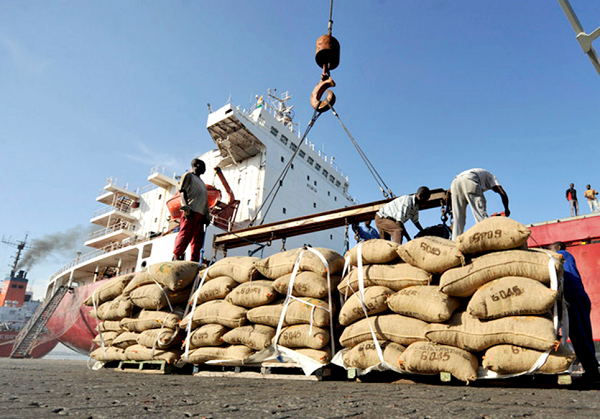
A buyer may purchase cocoa from many farmers and combine it at a buying point or warehouse.
That is commercially convenient, but it can make traceability difficult if the source of each quantity is not properly recorded.
Suppose an exporter receives 50 tonnes from several buying agents. If the records only identify the warehouse where the cocoa was received, the exporter may struggle to demonstrate the production locations of all the cocoa inside the shipment.
A stronger system connects the cocoa to identified suppliers and production plots before aggregation.
This is one reason cooperatives, buying agents and exporters have an important role in EUDR preparation.
What EU buyers may ask Nigerian exporters for
The exact commercial requirements can vary by buyer, but Nigerian exporters should expect increasing attention to information such as:
- Farm or plot geolocation
- Farmer and supplier identification
- Quantity sourced from identified farms
- Production location
- Traceability records
- Evidence relating to land-use history
- Evidence of legal production
- Shipment and batch records
- Due diligence information
- Supporting quality and export documents
The EU-supported assessment of Nigeria’s cocoa sector reported that international traders were already strengthening traceability systems and supporting the geolocation of farms within their supply chains.
Has the EU changed the EUDR rules in 2026?
The European Commission adopted further measures in July 2026 to update and simplify parts of the EUDR implementation framework. These included changes to the product scope and technical rules for the EUDR Information System.
The Commission also confirmed the application dates of 30 December 2026 for large and medium-sized operators and 30 June 2027 for other micro and small operators, subject to the regulation’s specific provisions.
This is why Nigerian exporters should avoid relying on old EUDR articles or training materials without checking whether they reflect the latest EU guidance.
The rules and implementation tools have continued to evolve, and businesses should verify the current requirements with their EU buyer and the latest European Commission guidance before shipping.
Nigeria is already preparing its cocoa supply chain
EUDR preparation is not happening in isolation.
In March 2026, the European Investment Bank and Nigeria’s Bank of Industry announced an €85 million agreement to support agricultural value chains, with at least 70% of the financing directed toward cocoa and dairy value chains. The EU said the initiative would support sustainable cocoa production, value addition and compliance with environmental and social standards, including EUDR and EU standards.
The development is relevant because compliance requires investment in systems, farmer organization, traceability, mapping, training and supply-chain management.
For Nigerian cocoa businesses, the transition therefore involves more than completing paperwork shortly before an export shipment.
Common mistakes Nigerian cocoa exporters should avoid
Waiting until the shipment is ready before collecting farm data.
Traceability information is much harder to reconstruct after cocoa has been mixed and stored.
Recording only the state or local government.
A broad geographic description is not the same as the required plot-level geolocation information.
Buying from unidentified suppliers.
A low purchase price can become a commercial problem if the origin of the cocoa cannot later be demonstrated.
Mixing traceable and untraceable cocoa.
Once different supply streams are mixed without adequate records, it can become difficult to establish which farms contributed to the final shipment.
Treating EUDR as only a deforestation issue.
The regulation also includes legality and due diligence requirements.
Using outdated compliance information.
The EU has continued to update the regulation’s implementation framework during 2026, so exporters should verify current requirements before each export programme.
Ignoring the buyer’s requirements.
An EU importer may have supply-chain procedures and data requirements that go beyond the minimum information an exporter has historically maintained. The EU-supported Nigerian assessment specifically identified this issue.
A practical EUDR preparation checklist for Nigerian cocoa businesses
Before targeting the EU market, an exporter should be able to answer these questions:
Do I know every major supplier in my export supply chain?
Can I identify the farms that produced the cocoa?
Do I have the required geolocation information for the relevant plots?
Can I connect cocoa purchases to identified farms or suppliers?
Do I have procedures for handling cocoa from unknown sources?
Can I provide evidence relevant to legal production?
Can I assess whether the production areas meet the deforestation-free requirement?
Can I maintain records for the required period?
Have I discussed the buyer’s EUDR requirements with the EU importer?
Are my Nigerian export documents in order?
These questions should be addressed before negotiating large EU-bound shipments.
What farmers should understand about the 2026 EU cocoa market
The biggest change is not simply another certificate.
The direction of the EU market is toward greater visibility of the supply chain.
For Nigerian farmers, this means farm identity, farm location and production records are becoming commercially important.
For cooperatives, it means developing organized farmer records and reliable aggregation systems.
For exporters, it means connecting farm-level information to physical cocoa movements and export documentation.
For EU buyers, it means being able to demonstrate that relevant cocoa entering the European market meets the applicable EUDR requirements.
Nigeria already has an established cocoa export industry, and the NEPC identifies cocoa beans and processed cocoa products as important components of the country’s cocoa trade.
The businesses that prepare their supply chains early will have more time to identify gaps in their records, train suppliers and resolve traceability problems before the main EUDR application dates arrive.
The important point for 2026 is therefore preparation. Nigerian cocoa farmers and exporters targeting Europe should not wait for a buyer to reject a shipment before discovering that farm-level information is incomplete.
Frequently Asked Questions
Does the EU Deforestation Regulation apply to Nigerian cocoa?
Yes. Cocoa is one of the commodities covered by the EUDR. Relevant cocoa products entering the EU must meet the regulation’s requirements concerning deforestation, legality and due diligence.
Do Nigerian cocoa farms need to be geolocated for EU exports?
The EUDR requires the relevant operator to obtain the geolocation of the plots where the cocoa was produced. Nigerian farmers may therefore need to provide farm-location information through their cooperative, aggregator or exporter.
When will the EUDR apply to cocoa?
The main EUDR obligations apply from 30 December 2026 for large and medium-sized operators. The general date for other micro and small operators is 30 June 2027, subject to the specific rules and exceptions in the regulation.
Does EUDR replace Nigeria’s normal cocoa export documents?
No. Nigerian exporters must still comply with applicable Nigerian export procedures. NEPC identifies exporter registration, export contracts, quality assurance documents, commercial documents, financial documentation and goods movement documents as components of formal export procedures.
What is the most important information Nigerian cocoa exporters should start collecting?
Farm geolocation, supplier identity, production information, traceability records, relevant legality evidence and information demonstrating that the cocoa meets the applicable deforestation-free requirements are among the key areas to address.
Can a Nigerian farmer export cocoa directly to an EU buyer?
A farmer can participate in an export supply chain, but formal export requirements apply to the exporting business. NEPC states that exporters from Nigeria must register with the Council and obtain an Exporter’s Certificate. Other product and destination-specific requirements may also apply.
Why is traceability becoming so important for Nigerian cocoa?
Traceability allows the supply chain to connect exported cocoa with its production sources. This is particularly important under EUDR because the relevant operator needs information about the plots where cocoa was produced and evidence supporting compliance.
Should Nigerian cocoa exporters wait until December 2026 before preparing?
No. Although the main application date for large and medium-sized operators is 30 December 2026, EU-supported work in Nigeria has already focused on cocoa traceability and farm geolocation. Starting early gives exporters more time to identify incomplete records and improve their supply chains.